
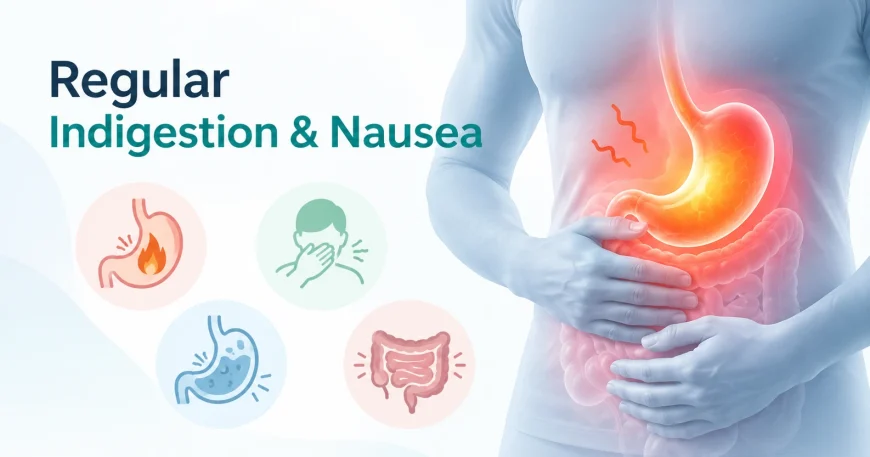

An occasional upset stomach is nothing to worry about. Nausea and indigestion that keep coming back, week after week, are your body flagging something worth investigating properly, not just managing with antacids indefinitely. Here’s what regular indigestion and nausea can point to, and when it’s time to see a gastroenterologist in Delhi.
Regular indigestion and nausea most commonly stem from acid reflux (GERD), gastritis, functional dyspepsia, or gallbladder issues. Still, liver conditions like fatty liver disease and hepatitis are an under-recognised cause too, since the liver’s role in digesting fat means liver dysfunction often shows up as stomach symptoms first. Globally, over 40% of people experience a functional gastrointestinal disorder at some point, making this genuinely common, not rare.
What Is Indigestion, Exactly?
Indigestion, medically called dyspepsia, is discomfort or pain in the upper abdomen, often with bloating, early fullness, or burning, typically related to eating. When no structural cause is found on investigation, it’s called functional dyspepsia, and it’s far more common than most patients realise.
Common Symptoms of Indigestion and Nausea
Recognising the full symptom picture helps your doctor narrow down the cause faster.
| Symptom | What It May Indicate |
| Burning sensation after meals | Acid reflux or gastritis |
| Bloating worse with fatty foods | Gallstones or liver-related bile issues |
| Early fullness with small meals | Functional dyspepsia or liver-related causes |
| Nausea with fatigue and right-side pain | Possible liver involvement |
| Symptoms after specific foods | Food intolerance |
Reasons for Regular Indigestion
Acid Reflux (GERD)
Stomach acid backing up into the oesophagus causes burning, regurgitation, and often nausea, particularly after large or fatty meals, or when lying down soon after eating.
Gastritis and Peptic Ulcers
Inflammation of the stomach lining, sometimes from H. pylori infection or long-term painkiller use, causes persistent upper abdominal discomfort, nausea, and sometimes appetite loss.
Gallstones
Stones forming in the gallbladder can block bile ducts, triggering pain, nausea, and bloating, particularly after fatty meals, since bile is what your body uses to digest fat in the first place.
Functional Dyspepsia
When investigations come back normal but symptoms persist, functional dyspepsia is often the diagnosis, a genuine condition, not “nothing wrong,” that still benefits from proper management.
Food Intolerances and Medication Side Effects
Lactose or gluten intolerance, and certain medications, particularly antibiotics, iron supplements, and anti-inflammatory painkillers, are common, often overlooked triggers for recurring stomach upset.
Liver Problems and Nausea: The Connection Many People Miss
Your liver produces bile, the substance that breaks down fat so your intestines can absorb it. When liver function is compromised, that process slows down, and the digestive symptoms show up long before you’d suspect the liver at all.
Fatty liver disease (NAFLD) reduces bile production and flow, leading to bloating, indigestion, and nausea, especially after fatty meals, often mistaken for a simple stomach problem for months before diagnosis.
Hepatitis, whether viral, alcohol-related, or medication-induced, commonly causes nausea, appetite loss, and general digestive discomfort alongside fatigue.
Cirrhosis, advanced liver scarring, disrupts bile production and can physically compress the stomach through fluid buildup (ascites), causing early fullness and persistent nausea.
Warning signs that point toward the liver specifically: persistent fatigue alongside your digestive symptoms, right upper abdominal pain, yellowing of the skin or eyes, and nausea that doesn’t clearly track with specific foods the way typical indigestion does.
Nausea Reasons Beyond Digestion Itself
Not all nausea originates in the stomach. Migraines, inner ear problems affecting balance, early pregnancy, certain medications, and anxiety can all cause genuine nausea without any digestive disease present at all. This is exactly why a thorough history matters; treating every case of nausea as a stomach problem by default can miss the actual cause entirely.
When Nausea and Indigestion Need Medical Attention
- Symptoms lasting more than two weeks despite basic dietary changes
- Unintentional weight loss alongside digestive symptoms
- Blood in vomit or stool, or black, tarry stools
- Yellowing of the skin or eyes, or persistently dark urine
- Severe or worsening abdominal pain, particularly in the upper right side
- Difficulty swallowing, or vomiting that won’t stop
How Indigestion and Nausea Are Diagnosed
A proper workup typically starts with a detailed history and physical exam, followed by blood tests, including liver function tests, if a liver cause is suspected.
An upper endoscopy allows direct visualisation of the oesophagus, stomach, and duodenum, while an abdominal ultrasound can identify gallstones or liver changes like fatty infiltration.
H. pylori testing is common when gastritis or ulcers are suspected. Your doctor will typically start with the least invasive tests and escalate only if symptoms persist or results suggest something needing closer investigation.
Treatment Options in West Delhi
According to the gastroenterologist in Delhi, treatment depends entirely on the underlying cause, not the symptom itself.
Reflux and gastritis typically respond to acid-reducing medication, dietary changes, and, where relevant, H. pylori eradication treatment. Gallstone-related symptoms may need surgical removal of the gallbladder if stones are confirmed and recurring.
Liver-related causes require addressing the liver condition directly, weight management and lifestyle changes for fatty liver, and antiviral treatment for certain hepatitis types, rather than simply treating the digestive symptom in isolation.
Functional dyspepsia often responds to a combination of dietary adjustment, stress management, and targeted medication once serious causes are ruled out.
Regular indigestion and nausea are common, but “common” doesn’t mean they should be ignored indefinitely. From acid reflux to gallstones to liver conditions that quietly show up as stomach symptoms first, the underlying cause determines the right treatment, and guessing rarely gets it right. If your symptoms have lasted more than two weeks, Gandhi Hospital’s gastroenterology team in Uttam Nagar offers proper evaluation to find out exactly what’s going on.
Gandhi Hospital has served West Delhi families for more than three decades from its Om Vihar location in Uttam Nagar, growing from a one-room clinic founded by Dr Pawan Gandhi in 1989 into a 60-bed multispeciality hospital with a dedicated Gastroenterology department. With on-site diagnostics, OPD, IPD, and emergency services under one roof, Gandhi Hospital offers accessible evaluation for regular indigestion and nausea at a trusted gastroenterology hospital in West Delhi, without the need to travel further into the city for basic diagnostic workup. Learn more or book a consultation at gandhihospital.info.