
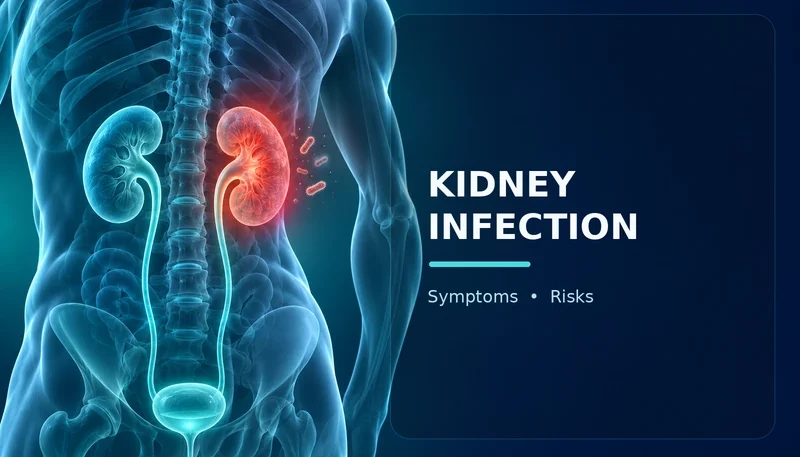

A kidney infection (pyelonephritis) is a bacterial infection that has climbed from the bladder into one or both kidneys. Fever with chills, pain in the back or side, and burning urination are the usual signs. Most people recover with a course of antibiotics, but vomiting, confusion, very little urine or high fever despite medical treatment in Delhi mean you should go to a hospital the same day, because a kidney infection that is missed can damage the kidney or spread to the blood.
Many people wait out a kidney infection at home because it starts like an ordinary urine infection. The difference is that the infection is now in the organ that filters your blood, and delay costs more. This guide covers what to look for, how it differs from kidney disease, and when it is time to be seen.
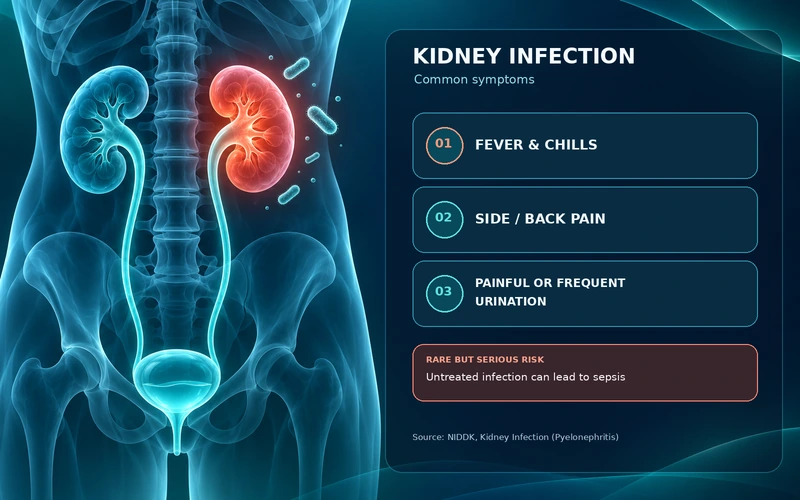
Symptoms of a Kidney Infection
| Sign | What you may notice |
| Fever and chills | Temperature of 38°C or above, sometimes with shaking |
| Flank or back pain | Dull, steady ache under the ribs, usually on one side |
| Urinary changes | Burning, urgency, frequent small passes |
| Urine appearance | Cloudy, dark, foul-smelling, occasionally blood-streaked |
| Nausea or vomiting | Common, and makes tablets hard to keep down |
Children may only have a fever. Older adults sometimes show confusion or sudden weakness first, so a relative who is “not themselves” and has a fever deserves a urine test.
Kidney Infection vs Kidney Disease
The two are often mixed up, and the difference matters for how worried you should be and what you do next.
| Kidney infection | Kidney disease (CKD) | |
| What it is | An infection, usually E. coli | Gradual loss of kidney function |
| Speed | Appears over a day or two | Builds over months or years |
| Usual cause | Bacteria from the bladder | Diabetes, high blood pressure, stones, other long-term problems |
| Outlook | Often clears completely with antibiotics | Managed long term, rarely reversed |
| Link | Repeated or untreated infections can scar the kidney | Weakened kidneys are more prone to infection |
Risks If a Kidney Infection Is Not Treated
Most infections caught early leave no lasting harm. The problems come with delay or repeat attacks:
- Sepsis: bacteria enter the bloodstream, causing a fast heartbeat, low blood pressure and confusion. This is an emergency.
- Kidney abscess: a pocket of pus that antibiotics alone may not clear.
- Scarring and reduced function: especially after several infections, and especially in children.
- Pregnancy complications: kidney infection raises the risk of early labour.
- Emphysematous pyelonephritis: a gas-forming infection seen mostly in people with diabetes.
Who Needs to Be Extra Careful
- People with diabetes
- Pregnant women
- Anyone with kidney stones or an enlarged prostate that blocks urine flow
- Elderly patients and young children
Kidney Infection: When to Go to Hospital
| Your situation | What to do |
| Mild fever, back pain, burning urine, eating and drinking normally | See a doctor within a day for a urine test and antibiotics |
| Repeated vomiting, cannot keep tablets or water down | Go to hospital; you may need drips and injectable antibiotics |
| Passing very little or no urine | Go to hospital now |
| Confusion, fainting, very fast heartbeat, shivering fits | Emergency care now; possible sepsis |
| Pregnant, diabetic or on immune-lowering drugs with any symptoms | Be seen the same day |
| No improvement after 2 to 3 days of antibiotics | Return for review; the antibiotic may need changing or a stone may be blocking flow |
How Doctors Treat It
- Urine test and culture to confirm infection and pick the right antibiotic.
- Blood tests to check infection markers and how well the kidneys are filtering.
- Antibiotics, usually for 7 to 14 days depending on the drug. Finish the full course even when you feel better.
- Hospital admission with intravenous antibiotics and fluids for severe cases.
- Ultrasound or CT scan if there is no response, to look for stones, blockage or an abscess.
Drink water steadily and use paracetamol for fever. Nephrologists in Delhi often advise avoiding ibuprofen-type painkillers, as they can strain the kidneys.
Preventing the Next One
- Drink enough water that your urine stays pale
- Do not hold urine for long stretches
- Women: urinate after sex and wipe front to back
- Treat bladder infections early rather than waiting
- Get stones and prostate problems treated rather than ignored
Care for Kidney Infections in Uttam Nagar
If you are searching for a kidney doctor in Uttam Nagar, Gandhi Hospital is a 60-bed multispeciality secondary care hospital with OPD, emergency, ICU and diagnostics. That setup matters for a kidney infection, where urine tests, blood work and imaging need to happen quickly, and where a patient who deteriorates needs inpatient monitoring. Our physicians can assess your symptoms, begin kidney infection treatment in Uttam Nagar, and tell you whether a nephrologist or a nephrology hospital in Delhi is the right next step for scarring, stones or recurring infection. Call the team to check availability before you travel.