
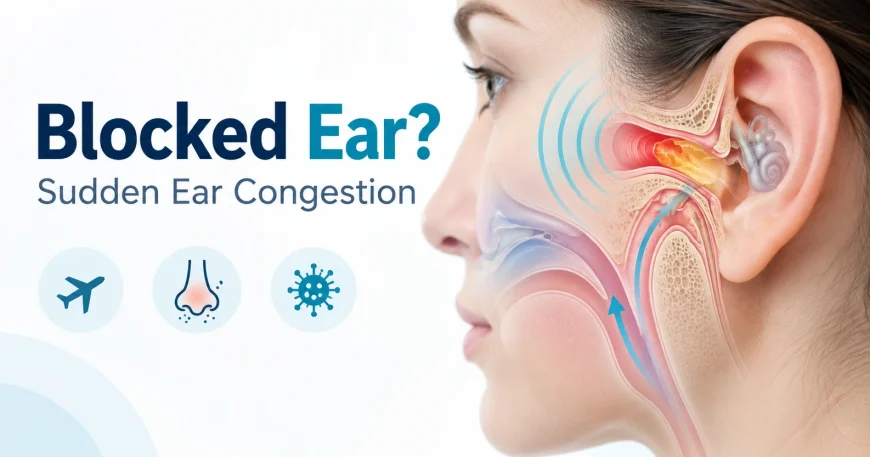

Sudden ear congestion is usually one of four things: wax buildup, a Eustachian tube that isn’t equalising pressure properly (often after a cold or allergy flare), fluid or infection behind the eardrum, or trapped water. Most cases settle within one to two weeks. If yours doesn’t, or comes with pain, discharge, or dizziness, it’s time to see an ENT doctor in Uttam Nagar rather than wait it out.
What’s Actually Happening When Your Ear Feels “Clogged”
That plugged, underwater sensation, muffled hearing, a feeling of fullness or mild pressure, happens when sound isn’t reaching your eardrum normally, or when the pressure on either side of it isn’t balanced. Sometimes it’s a physical blockage, wax or fluid; sometimes it’s functional, the eustachian tube not opening properly. Either way, it’s one of the more common reasons people search for an ear doctor in Uttam Nagar.
Four Causes Behind Most Blocked Ears
| Cause | What’s Happening | Typical Trigger |
| Earwax buildup | Wax accumulates faster than it clears, blocking the canal | Cotton buds, earphones, hearing aids |
| Eustachian tube dysfunction | The tube connecting middle ear to throat doesn’t equalise pressure | Cold, sinus congestion, allergies |
| Middle ear fluid/infection | Fluid collects behind the eardrum, sometimes gets infected | Prolonged eustachian tube blockage |
| Trapped water/pressure change | Temporary plugging from water or altitude shifts | Swimming, bathing, flights |
Earwax Buildup
Wax is protective by design, but it can build up faster than the ear clears it naturally, especially with regular cotton bud use, in-ear headphones, or hearing aids. It’s one of the single most common causes of a blocked ear at any age, and usually the easiest to resolve once properly diagnosed.
Eustachian Tube Dysfunction
The eustachian tube keeps pressure equal between your middle ear and the back of your nose and throat. When it doesn’t open properly, most often because of a cold, sinus congestion, or allergies, pressure builds unevenly, and the ear feels blocked, sometimes with clicking or popping. This specifically affects only around 1% of adults overall, but is considerably more common right after a cold, flu, or allergy flare, and in children.
Fluid or Infection Behind the Eardrum
If the eustachian tube stays blocked for a stretch, fluid can build up behind the eardrum. Left untreated, this fluid can become infected, a middle ear infection, usually bringing pain and sometimes fever alongside the blocked feeling.
Trapped Water or Pressure Changes
Water left behind after a swim or bath, or a rapid change in altitude while flying, can create the same clogged sensation temporarily. This usually clears fastest on its own, though water trapped in an irritated canal can occasionally lead to an outer-ear infection.
Other, Less Common Reasons for Ear Congestion
- Chronic acid reflux (GERD), which can irritate the eustachian tube lining over time
- Enlarged adenoids, especially in children with recurring blockage
- TMJ (jaw joint) issues, which can refer a blocked feeling to the ear
- A deviated septum or nasal polyps, restricting normal eustachian tube function
- Rarely, a growth such as cholesteatoma, which needs prompt evaluation
How Long Is Too Long?
A block tied to a cold or allergy flare typically clears within one to two weeks as the underlying congestion settles. If it drags on beyond that, or keeps coming back, it’s a sign the actual cause, whether wax, chronic sinus issues, or something structural, needs direct treatment rather than more waiting.
When to Stop Waiting and See an ENT Hospital in West Delhi
- Ear pain that’s getting worse, not better
- Discharge from the ear of any kind
- Sudden or worsening hearing loss
- Dizziness, balance problems, or ringing in the ear
- Fever alongside the ear symptoms
- No improvement after seven to ten days
- The same blockage keeps returning
How an ENT Evaluation Actually Works
- Direct examination (otoscopy) of the ear canal and eardrum to spot wax, fluid, or infection immediately
- Tympanometry, where needed, to check how well the middle ear is functioning
- A look at the nose and throat, since allergy or sinus issues are frequently the real cause behind eustachian tube dysfunction
- Professional wax removal via microsuction or curettage, safer than home methods that risk pushing wax deeper
Matching Treatment to the Actual Cause
| Underlying Cause | What Treatment Involves |
| Earwax buildup | Professional removal, not cotton buds |
| Eustachian tube dysfunction | Treating the nasal congestion or allergy driving it |
| Middle ear fluid/infection | Medical treatment; drainage if fluid persists |
| Trapped water | Usually resolves on its own with simple techniques |
| Structural or chronic causes | Targeted, ENT-guided management |
Why Home Remedies Often Make It Worse
Cotton buds, ear candles, and forceful flushing are a leading reason a simple blockage turns complicated, pushing wax deeper or irritating the canal rather than clearing it. A gentle approach by an ENT doctor in Uttam Nagar is safer, and for wax impaction specifically, usually clears the blockage in a single visit.
Ear congestion almost always traces back to one of a few identifiable causes, wax, eustachian tube dysfunction, middle ear fluid, or trapped water, and most cases genuinely resolve within one to two weeks. If yours hasn’t, or is accompanied by pain, discharge, or dizziness, it’s worth a proper evaluation rather than more home remedies. Gandhi Hospital’s ENT team in Uttam Nagar offers experienced, accessible care to identify exactly what’s behind the blockage.
Gandhi Hospital has served West Delhi families for more than three decades, with a dedicated ENT department treating conditions of the ears, nose, throat, sinuses, and neck alongside 24×7 emergency and OPD services. As a trusted ENT hospital in Uttam Nagar and West Delhi, Gandhi Hospital offers direct examination, safe wax removal, and evaluation of persistent or recurring ear congestion, without the long travel further into the city for care that should be close to home.