
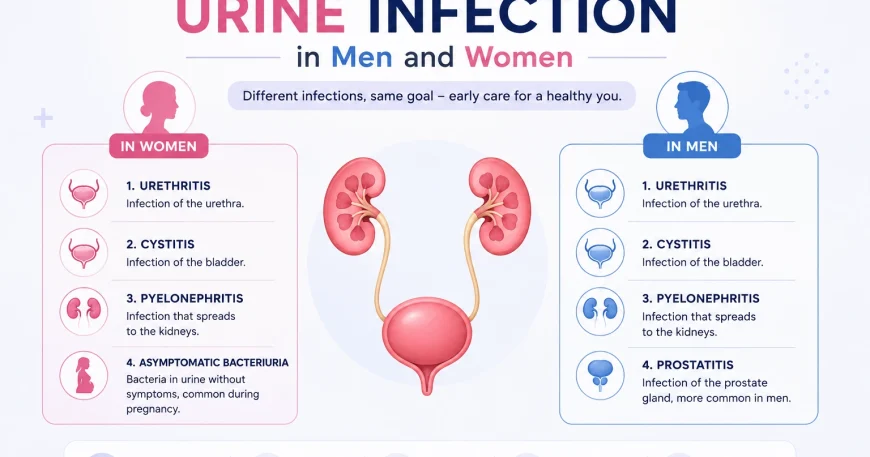

Urinary tract infections (UTIs), commonly known as urine infections, are among the most common bacterial infections affecting both men and women. A urine infection can occur anywhere within the urinary tract, including the urethra, bladder, ureters, and kidneys. While women are generally more susceptible to these infections, men can also develop urinary infections, particularly when underlying urinary tract conditions are present.
Understanding the different types of urine infection, their symptoms, causes, and treatment from a top urologist in Delhi can help individuals seek timely medical care and avoid complications.
What Is a Urine Infection?
A urine infection occurs when bacteria enter the urinary tract and multiply, leading to inflammation and infection. More than 8 million people are affected by a UTI every year (source). Most infections are caused by bacteria that normally live in the digestive tract and gain access to the urinary system through the urethra.
The urinary tract consists of:
- Kidneys
- Ureters
- Bladder
- Urethra
Depending on which part of the urinary tract is affected, different types of urine infections can develop.
Types of Urine Infection
1. Urethritis
Urethritis is an infection or inflammation of the urethra, the tube that carries urine out of the body.
Common Symptoms
- Burning sensation during urination
- Itching or irritation near the urethral opening
- Increased urinary frequency
- Discomfort while urinating
In some cases, urethritis may be associated with sexually transmitted infections.
2. Cystitis (Bladder Infection)
Cystitis is the most common type of urinary tract infection. It occurs when bacteria infect the bladder lining.
Common Symptoms
- Frequent urge to urinate
- Burning during urination
- Cloudy urine
- Strong-smelling urine
- Lower abdominal pain
- Pelvic discomfort
Women are particularly prone to bladder infections because bacteria can reach the bladder more easily through the shorter female urethra.
3. Pyelonephritis (Kidney Infection)
A kidney infection develops when bacteria travel from the bladder to one or both kidneys.
Common Symptoms
- High fever
- Chills
- Back or flank pain
- Nausea and vomiting
- Painful urination
- Fatigue
Kidney infections require prompt medical attention because untreated infections can lead to serious complications.
4. Recurrent Urinary Tract Infection
Some individuals experience repeated infections over time.
A recurrent UTI is commonly defined as:
- Two infections within six months, or
- Three infections within one year
Recurrent infections often require a more detailed evaluation to identify contributing factors.
5. Complicated Urinary Tract Infection
A complicated UTI occurs when underlying medical conditions increase the risk of treatment failure or recurrence.
Common risk factors include:
- Kidney stones
- Diabetes
- Enlarged prostate
- Urinary tract abnormalities
- Long-term catheter use
These infections typically require specialised treatment and close monitoring.
Urine Infection in Women
Urinary tract infections are significantly more common in women than in men.
Several factors contribute to this increased risk:
- Shorter urethra
- Pregnancy-related changes
- Hormonal changes after menopause
- Sexual activity
- Previous history of UTIs
Symptoms of Urine Infection in Women
Women may experience:
- Burning while urinating
- Frequent urination
- Pelvic pressure
- Lower abdominal pain
- Blood in the urine
- Cloudy or foul-smelling urine
Women who experience recurrent urinary infections should seek medical evaluation to identify underlying causes and prevent complications.
Urine Infection in Men
Although less common, urinary infections in men should not be ignored.
Many male urinary infections are associated with underlying conditions that affect urine flow.
Common Causes in Men
- Enlarged prostate
- Kidney stones
- Urinary retention
- Diabetes
- Urinary tract abnormalities
Symptoms of Urine Infection in Men
Men may experience:
- Painful urination
- Frequent urination
- Difficulty emptying the bladder
- Lower abdominal discomfort
- Blood in the urine
- Fever and chills
Older men may be at higher risk because prostate enlargement can interfere with normal bladder emptying.
Urine Infection After Sex
Sexual activity can increase the risk of urinary tract infections, particularly in women.
During intercourse, bacteria around the genital area may enter the urethra and travel into the bladder.
Risk Factors
- Frequent sexual activity
- Previous history of UTIs
- Certain contraceptive methods
- Inadequate hydration
Prevention Tips
- Urinate after intercourse
- Stay well hydrated
- Maintain good personal hygiene
- Avoid delaying urination
Individuals who frequently develop urinary infections after sex should consult a healthcare professional for further evaluation.
Can a Urine Infection Cause Abdominal Pain?
Yes. Abdominal pain is a common symptom of urinary tract infections. The location of the pain often depends on the severity and location of the infection.
Lower Abdominal Pain
Bladder infections commonly cause:
- Pressure in the lower abdomen
- Pelvic discomfort
- Mild cramping sensations
Back and Flank Pain
Kidney infections may cause:
- Pain in the sides of the back
- Flank pain
- Severe discomfort accompanied by fever
Abdominal pain associated with fever, vomiting, or blood in the urine requires immediate medical attention.
Urine Infection Treatment
Treatment depends on the type and severity of the infection.
Diagnosis
Doctors may recommend:
- Urine routine examination
- Urine culture
- Blood tests
- Ultrasound or imaging studies when required
Treatment Options
Common treatment approaches include:
- Antibiotic therapy
- Increased fluid intake
- Pain-relieving medications
- Management of underlying conditions
Patients with recurrent or complicated infections may require additional investigations and long-term management strategies.
When Should You See a Doctor?
Medical evaluation is recommended if you experience:
- Burning urination lasting more than a few days
- Recurrent urinary infections
- Fever or chills
- Blood in the urine
- Severe abdominal pain
- Back or flank pain
- Difficulty passing urine
Early diagnosis and treatment from a top urologist in Delhi can help prevent infection from spreading to the kidneys and reduce the risk of long-term complications.
Urinary tract infections can affect daily life and may lead to serious complications if left untreated. Whether you are experiencing your first urine infection or dealing with recurrent symptoms, timely medical care is essential for accurate diagnosis and effective treatment.
At Gandhi Hospital, our experienced urology specialists provide comprehensive evaluation and treatment for all types of urinary tract infections in men and women. From advanced diagnostic testing to personalised treatment plans, our team focuses on identifying the root cause of infection and helping patients achieve long-term relief.
If you are experiencing symptoms such as burning urination, abdominal pain, frequent urination, recurrent infections, or blood in the urine, schedule a consultation with the urology team at Gandhi Hospital for expert care and treatment.