
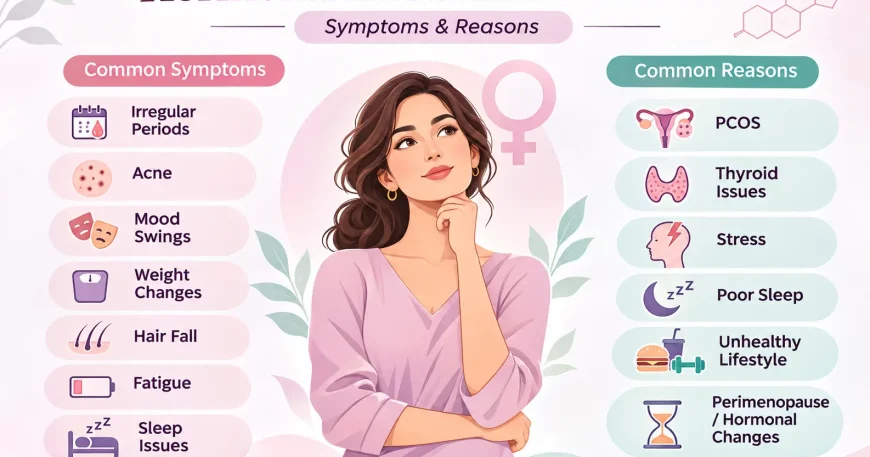

11.34% is the pooled PCOS prevalence estimate for India cited by FOGSI, using Rotterdam diagnostic criteria. This figure concerns PCOS specifically; it does not measure every hormonal disorder. Hormonal imbalance symptoms in females include irregular periods, acne, excess facial hair, hair thinning, and unexplained weight changes. Different conditions produce different symptom patterns.
Seek assessment when symptoms persist or your usual menstrual pattern changes. PCOS, thyroid disorders, and menopause-related changes require different approaches. A gynaecologist in Uttam Nagar, Delhi, can review your symptoms and menstrual history to determine which investigations are appropriate.
How Hormonal Conditions Affect Periods in Females
Track the interval from the first day of one period to the first day of the next. FOGSI uses intervals outside 21–35 days when assessing ovulatory dysfunction. This measures cycle length, rather than the number of bleeding days. A changed pattern alone cannot confirm a hormonal disorder.
Discuss missed, unpredictable, or unusually heavy periods with a gynaecologist. PCOS can disrupt ovulation and produce infrequent or absent periods. Some women also experience prolonged or heavy bleeding.
Report accompanying symptoms during your consultation. Fatigue, cold sensitivity, and weight gain alongside heavy or irregular periods warrant assessment for thyroid disease. Perimenopause also changes menstrual frequency and flow. A gynaecologist in Uttam Nagar assesses these patterns alongside your age, medical history, and other symptoms.
Common Reasons for Hormonal Imbalance in Females
- Assess PCOS when irregular periods occur with acne or excess facial hair. PCOS involves disrupted hormonal signalling and higher androgen levels. Its exact cause remains unknown, although family history increases risk.
- Check for thyroid disorders when menstrual changes accompany fatigue, constipation, or cold sensitivity. Hashimoto’s disease, thyroid inflammation, certain medicines, surgery, and radiation treatment can cause an underactive thyroid.
- Investigate raised prolactin when the symptom pattern warrants testing. Excess prolactin can disrupt ovulation and menstrual regularity.
- Review medicines and steroid exposure with your doctor. Clinicians consider medication effects and adrenal conditions when assessing relevant hormonal symptoms.
- Discuss life-stage changes when periods become less predictable. Perimenopause changes menstrual frequency and flow, alongside symptoms such as hot flushes and night sweats.
Normal Hormonal Changes Across Life Stages
Consider age and reproductive stage when assessing menstrual changes. Puberty and perimenopause can involve irregular cycles, so irregularity alone does not establish PCOS. Clinicians assess other symptoms and exclude alternative causes.
Discuss changes in menstrual frequency or flow alongside hot flushes, night sweats, sleep problems, or vaginal dryness. These symptoms can accompany perimenopause and menopause, although their severity varies between individuals. Seek assessment when symptoms affect daily life or differ from your usual pattern.
How Gynaecologists Assess Hormonal Symptoms
1. Review Menstrual and Medical History
Bring your menstrual dates, symptom history, previous reports, and a list of medicines to the consultation. FOGSI recommends a detailed history and physical examination when assessing suspected PCOS. The clinician checks for excess hair growth, acne, and scalp hair loss.
2. Select Tests Based on Symptoms
Discuss investigations with your gynaecologist in Uttam Nagar. The clinician selects tests according to your symptoms and examination. Thyroid blood tests help assess suspected hypothyroidism; symptoms alone cannot establish that diagnosis.
3. Assess PCOS Using Clinical Criteria
Consider PCOS testing as part of a wider assessment. WHO describes adult diagnosis using at least 2 of these 3 features, after clinicians exclude other causes:
- Androgen excess, identified through clinical signs or blood tests.
- Irregular or absent menstrual periods.
- Polycystic ovarian appearance on ultrasound.
An ultrasound finding alone does not confirm PCOS. Some women with PCOS do not have polycystic ovaries.
Gynaecology Treatment in Delhi for Hormonal Conditions
Match treatment to the diagnosed cause and pregnancy plans. A gynaecologist selects treatment according to symptoms, medical history, and individual risks.
- Discuss PCOS treatment with your clinician. Options include lifestyle measures, combined oral contraceptives for irregular cycles, and selected medicines for androgen-related symptoms. Fertility concerns require a different treatment approach.
- Treat confirmed hypothyroidism with prescribed thyroid replacement. Clinicians use levothyroxine and check blood levels approximately 6–8 weeks after starting treatment. They adjust the dose according to results.
- Review PCOS-related metabolic risks separately. FOGSI includes metformin for selected patients alongside lifestyle measures. The clinician assesses suitability rather than prescribing it for every hormonal complaint.
Hormonal Imbalance Home Remedies: Evidence and Limits for Women
- Follow a balanced, varied diet. FOGSI recommends healthy eating for PCOS and finds limited evidence that one equivalent-calorie diet outperforms another.
- Aim for regular physical activity. For adults with PCOS, FOGSI recommends 150 minutes of moderate activity weekly, plus strengthening on 2 non-consecutive days.
- Continue prescribed treatment alongside lifestyle changes. Healthy habits form part of PCOS management, including when they do not produce weight loss.
- Discuss supplements before taking them. Iodine supplements and iodine-rich seaweed can worsen hypothyroidism in people with certain thyroid conditions. A home remedy does not replace cause-specific treatment.
When to Consult a Gynaecologist in Uttam Nagar, Delhi
Book a consultation when menstrual changes persist, symptoms affect daily life, or irregular periods accompany difficulty conceiving. Report acne, excess facial hair, or scalp hair loss alongside menstrual changes. These patterns warrant assessment rather than self-diagnosis.
Seek prompt specialist assessment for rapidly developing excess hair growth, a deepening voice, or other virilising changes. Clinicians investigate these signs for causes beyond PCOS, including ovarian or adrenal conditions.
Discuss disruptive hot flushes, night sweats, sleep problems, or vaginal discomfort with a gynaecologist in Uttam Nagar. Menopause symptoms vary, and their effect on daily life helps guide care.
Discuss your concerns with a clinician rather than starting hormone medicines or supplements yourself. Bring your menstrual history, previous reports, and medicine list to the appointment. This information helps the clinician assess your symptoms and select relevant investigations.
Contact Gandhi Hospital to enquire about a gynaecology consultation. If you are seeking a gynaecologist in Uttam Nagar, Delhi, discuss your symptoms, menstrual concerns, and pregnancy plans when booking your appointment.